 Order via WhatsApp
17
Jun
Irrigation system: garden setup and care guide
An irrigation system saves water and keeps lawns, trees and flowers healthy. Learn how installation,...

Səbət boşdur
We add value to your greenery with professional gardening services.



Jul 24, 2026

0
3 dəq. oxuma
Choosing plants only by appearance can lead to drying, leaf burn and weak growth in Absheron. Strong wind increases moisture loss, while salt spray near the coast can damage sensitive foliage. The right species, planting location and planned care during establishment reduce these risks.
The same plant will not perform equally in every location. Distance from the sea, wind direction, soil, sun exposure and irrigation capacity should be assessed together.
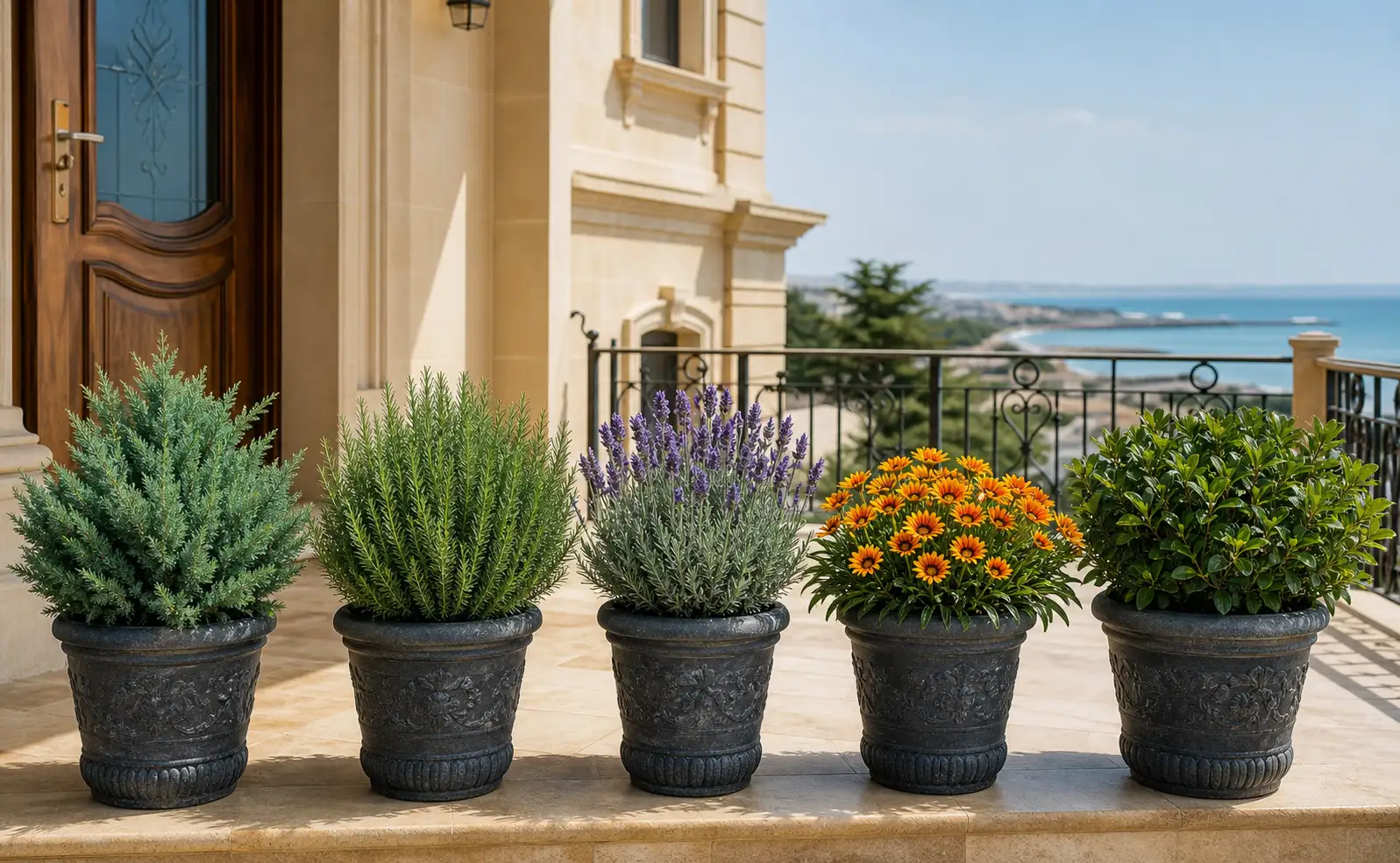
Olive, Russian olive, pomegranate, fig, cypress and suitable juniper varieties can be considered for Absheron conditions. Rosemary, lavender, oleander and pittosporum may also be used in shrub groups where conditions are suitable. “Resistant” does not mean maintenance-free: newly planted specimens need planned watering and wind protection while roots establish.
Some ornamental plants, including oleander, can be toxic if ingested. Consider children and pets when selecting plants.
Rosemary, lavender, santolina, thyme and suitable ornamental grasses can support a lower-water design. They generally perform best in well-drained soil. Even drought-tolerant plants may develop root problems if water remains around the roots.
Salt spray can accumulate on leaves and cause dry edges or burn. Instead of placing sensitive plants on the exposed boundary, create a protective green belt with more tolerant species. After strong salt exposure, rinsing foliage with fresh water may sometimes help, but do not wet leaves during the hottest hours.
Walls, fences and pergolas can be used to slow wind rather than block it completely. A fully solid barrier may create turbulence, while a more permeable windbreak can distribute pressure better. Allow for the mature crown, roots, buildings and utility lines.
Before planting, soil analysis and fertility restoration can help assess structure, pH and drainage.
Group plants by water requirement. Use tolerant trees and shrubs on exposed edges and place more sensitive ornamentals further inside. The landscape design and decoration service can match plant selection to the site microclimate.
No. Newly planted specimens require controlled watering until the roots establish.
No. Drought, root problems, excess fertiliser and pests can cause similar symptoms.
Yes, but mature size, root space, planting distance and temporary support must be planned.
For a plant list and planting plan suited to your property, contact 166 Bağban.



Jul 24, 2026
Jul 24, 2026

Jul 24, 2026
Jun 17, 2026
Jun
An irrigation system saves water and keeps lawns, trees and flowers healthy. Learn how installation,...
Jun
Learn how soil preparation, irrigation, mowing and seasonal care help create a healthy lawn with 166...

Jun
Learn how soil analysis improves pH balance, fertilizing, irrigation and long-term garden growth wit...
Peşəkar komandamız sizə bağınızı daha gözəl etməkdə kömək edəcək.
