 Order via WhatsApp





17
Jun
Lawn Installation: Seed, Turf and Ongoing Care
Plan a lawn from soil preparation to seed or turf, irrigation and the first mow. Learn how to mainta...

Your cart is empty
Professional gardening services to care for your green spaces.



Jun 17, 2026
3 min read
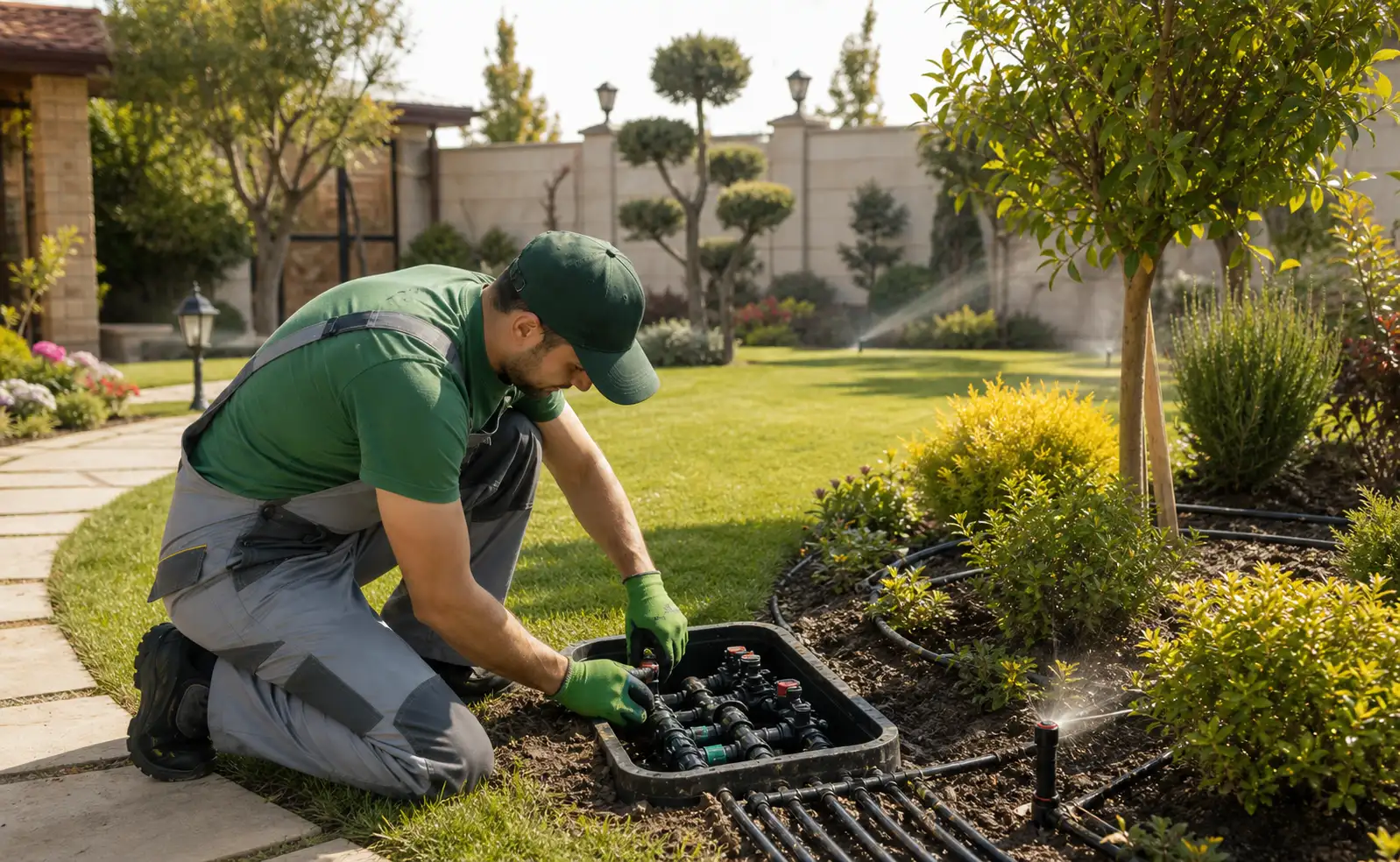
An irrigation system should deliver water where plants need it, at a rate the soil can absorb. Lawns, trees, shrubs and flower beds have different needs, so a useful design starts with the garden rather than a fixed watering duration.
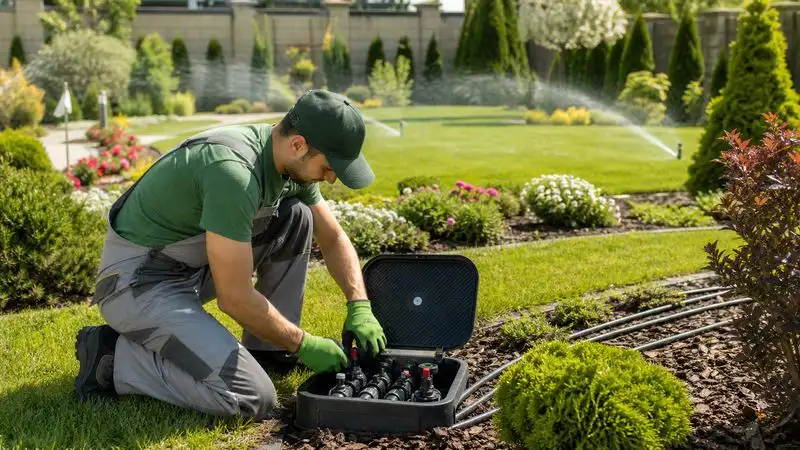
Manual watering can leave some areas dry and others saturated. An automatic system can improve consistency, but only if its zones, pressure and schedule suit the site. Before installation, assess the planted areas, sunlight, wind, soil and available water supply. Plan pipe routes alongside paths, planting and lawn work so that finished surfaces do not need to be excavated later.
Drip irrigation is often suitable for trees, shrubs, borders and vegetable beds. Emitters deliver water near the root zone and can reduce unnecessary watering between plants. Their spacing and flow need to match the planting; one arrangement will not suit every bed.
Sprinklers can cover lawns evenly when the heads are correctly positioned and the pressure is suitable. Check the distribution across edges and corners, and avoid spraying paths or walls. Separate lawn zones from planting with different water needs. Consider irrigation before laying turf or sowing seed, because even establishment moisture is important.
Clay soils usually absorb water more slowly and may need shorter watering cycles with time for infiltration. Sandy soils drain faster and require a different schedule. Irrigation cannot compensate for a blocked drain or a low area where water accumulates. Assess those conditions before increasing the watering time.
Measure the available pressure and flow before selecting the number of heads in each zone. Pipes, filters, valves, timers and emitters must work together. Too many outlets on a weak supply can leave the far end of a zone dry. A timer controls when water runs; it does not confirm that the water reaches the roots.
Look for reduced pressure, a zone that does not start, persistent wet patches, damaged heads, blocked emitters or a controller that has lost its settings. Check filters and visible fittings before assuming that the entire underground system needs replacement. Compare the wet and dry areas while each zone runs, then inspect again after watering.
After repair, test coverage and shut-off as well as whether the system switches on. A leaking valve or poorly adjusted head can continue wasting water even when the lawn initially looks well watered.
At the start of the growing season, inspect the controller, filters, lines and heads. In summer, favour early-morning watering and adjust for actual soil moisture, wind and plant growth. As temperatures fall, reduce unnecessary irrigation. Clean the equipment and protect or drain frost-exposed components according to the manufacturer’s guidance.
Irrigation should be coordinated with mowing, pruning, soil care and fertilisation. If plants remain weak despite regular watering, assess the roots and soil rather than simply adding more water. 166 Bağban provides irrigation installation and repair as part of a site-specific garden care plan.
Learn more about Irrigation System Installation and Repair. Share the address, approximate area and the problem you want to resolve. Call +994 50 290 87 69 or use the contact page.
Jun
Plan a lawn from soil preparation to seed or turf, irrigation and the first mow. Learn how to mainta...
Jun
Understand soil pH, nutrients, compaction and drainage. Use soil analysis to plan planting, fertilis...
Jul
A practical summer watering plan for lawns, trees, shrubs and flowers in Baku and Absheron, with the...

Our professional team will help make your garden more beautiful.
