 Order via WhatsApp






17
Jun
Irrigation system: garden setup and care guide
Plan garden irrigation with suitable drip lines, sprinklers and watering zones. Learn about pressure...

Your cart is empty
Professional gardening services to care for your green spaces.



Oct 16, 2026
4 min read
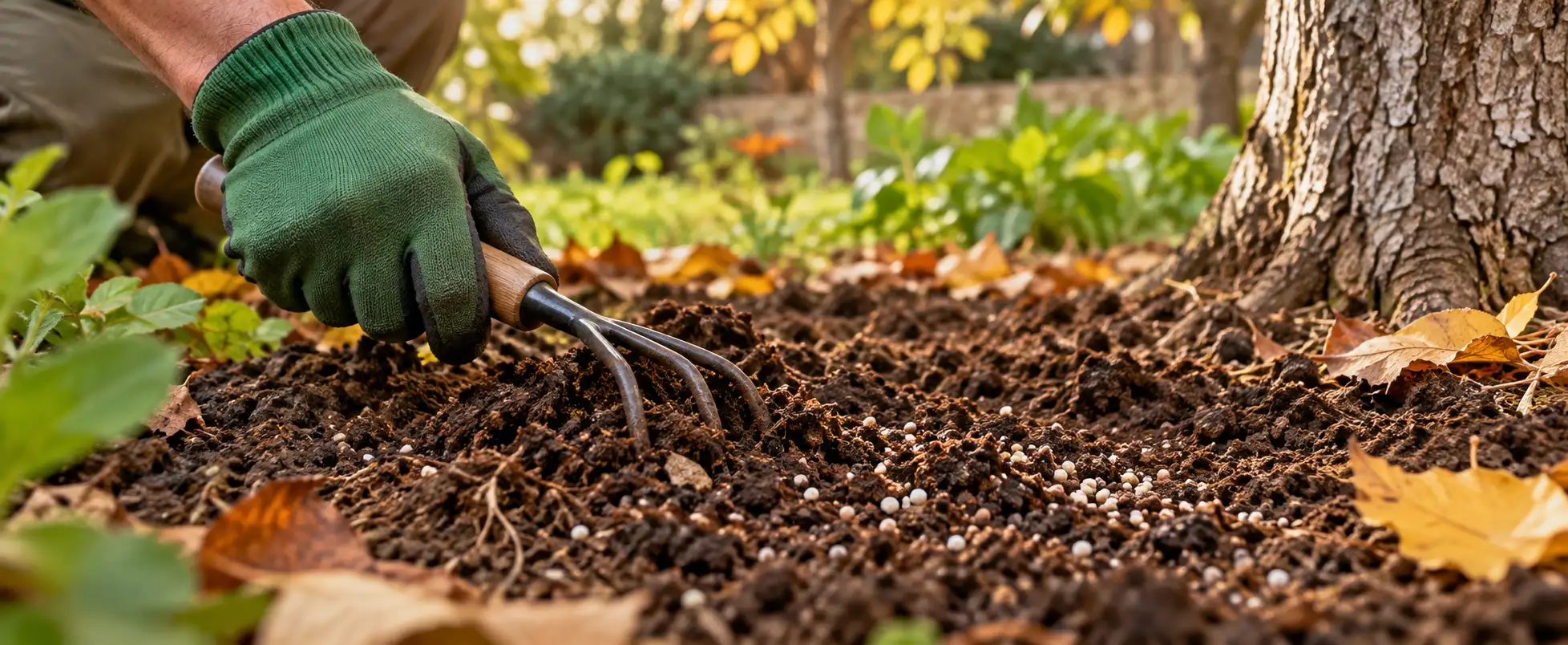
Autumn fertilization can help prepare a garden for winter, but not every fertilizer is suitable for every season. Nitrogen accelerates leaf and shoot growth. When applied at a high rate as temperatures begin to fall, it can delay dormancy and encourage soft new growth that is more vulnerable to cold. Fertilization should therefore be based on tree species, age and soil condition. The garden can be assessed as part of our pruning, irrigation and fertilization service.
Nitrogen is not harmful by itself. The risk comes from applying the wrong dose at the wrong time without confirming the tree’s actual need. In autumn, a tree should harden existing tissue, complete shoot lignification and prepare its root system for winter rather than produce fresh leaves and shoots.
A long, mild autumn in Baku and Absheron does not remove this risk. Warm days can extend nitrogen-driven growth, leaving immature shoots exposed when temperatures later fall sharply.
High-nitrogen fertilizer is generally unsuitable after active growth has ended for deciduous fruit trees such as apple, pear, quince, sweet cherry, sour cherry, apricot, peach and plum. Late soft growth can be particularly vulnerable on stone-fruit trees.
Giving a newly planted tree a large nitrogen dose to make it grow faster can damage roots, disrupt water balance and weaken winter readiness. Fertilizer at planting should follow soil conditions and the instructions for the specific product.
Trying to revive a tree stressed by drought, disease, root damage or heavy pruning with nitrogen can create additional stress. The cause of weakness, irrigation and soil conditions should be checked first.
Late-season high-nitrogen feeding should also be avoided for deciduous ornamentals, hedges, Leyland cypress, thuja, pine and other evergreens. Always check the label: a low-nitrogen autumn formulation is not the same as a regular high-nitrogen spring or summer fertilizer.
Check the NPK analysis before applying any product: the first number represents nitrogen. Do not spread a spring or summer product with a high first number around trees in autumn, and prevent high-nitrogen lawn fertilizer from reaching the tree root zone.
If soil pH, salinity and nutrient balance are unknown, soil analysis and fertility restoration is a better starting point than guessing. Phosphorus and potassium should also be used only when a real need is identified.
Before the visit, note the tree species and approximate age, the last fertilization date, the product used, the irrigation routine and the symptoms you see. Photos of leaves, shoots and the soil surface can help with the initial assessment. 166 Bağban evaluates the tree, the season and the wider maintenance needs together.
Prepare your trees for winter by choosing fertilizer according to actual need rather than guesswork. Share the tree species, garden address, approximate area and fertilizer history so our team can prepare a suitable fertilization and maintenance plan. For booking and an assessment, call +994 50 290 87 69 or contact us here.
Jun
Plan garden irrigation with suitable drip lines, sprinklers and watering zones. Learn about pressure...

Jun
Plan a lawn from soil preparation to seed or turf, irrigation and the first mow. Learn how to mainta...
Jun
Understand soil pH, nutrients, compaction and drainage. Use soil analysis to plan planting, fertilis...
Our professional team will help make your garden more beautiful.
