 Order via WhatsApp
17
Jun
Irrigation system: garden setup and care guide
An irrigation system saves water and keeps lawns, trees and flowers healthy. Learn how installation,...

Səbət boşdur
We add value to your greenery with professional gardening services.



Aug 10, 2026

0
5 dəq. oxuma
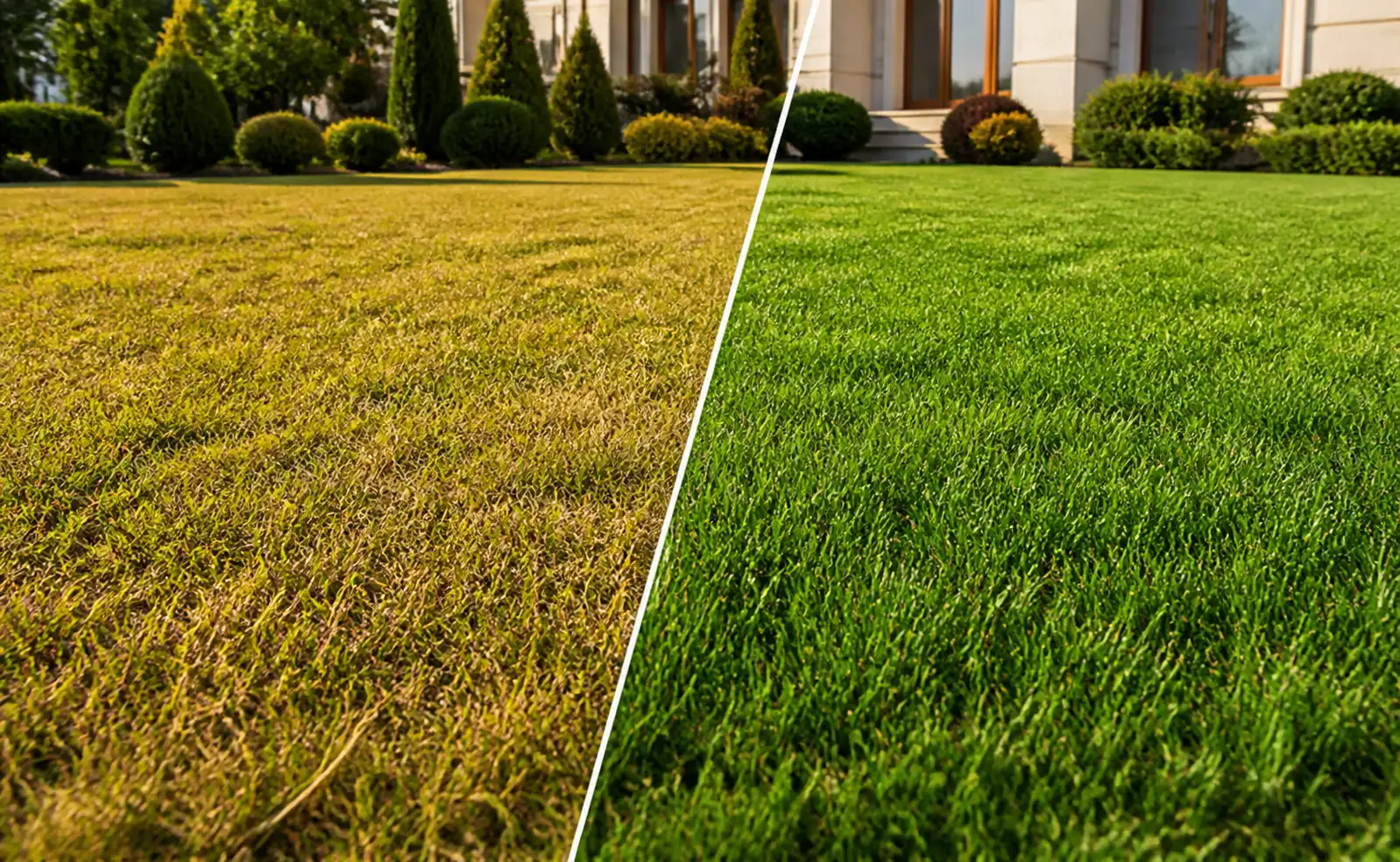
A yellow lawn in summer does not always mean that the grass is dead. In Baku and Absheron's hot, windy climate, yellowing may result from irrigation errors, incorrect mowing, hard compacted soil, insufficient nutrients, disease or pests. The first step toward recovery is identifying the pattern of damage and checking the root zone.
Uniform fading across the whole lawn often points to a general irrigation or maintenance problem. Circular, dark-edged or irregular patches may indicate uneven watering, fungal disease, pet urine, compacted soil or pests. If mainly the grass tips are yellow, inspect the mower blade.
Check whether the soil is moist 5–8 cm below the surface, observe whether sprinklers cover the entire area evenly and gently test whether grass in the affected patch pulls away from the soil too easily.
Frequent but very short watering moistens only the surface. Grass roots do not grow deeply, so the lawn dries out and turns yellow more quickly in hot, windy weather. Check how deeply the water penetrates before changing the schedule.
Constantly wet soil restricts oxygen around the roots, weakens grass and increases disease risk. Standing water, persistently soft soil, unpleasant odour and dark patches can indicate excess moisture.
At midday, more water is lost to evaporation and distribution may be uneven. Early morning is generally the best time for the main irrigation cycle. If evening watering is necessary, avoid leaving foliage wet for too long overnight. See our guide on watering a garden in the Baku heat.
Removing too much grass at once reduces the leaf area, exposes the soil to sunlight and stresses the roots. Avoid removing more than roughly one-third of the height in a single mowing and keep the lawn slightly taller during extreme heat.
A dull blade tears rather than cleanly cuts the grass. The frayed tips turn pale and then yellow-brown, making the entire lawn look faded. Sharpen the blade when cut ends look fibrous or shredded.
Heavy foot traffic compacts soil and limits the movement of water and air into the root zone. Nutrient deficiency may also lighten the colour, but applying a strong fertiliser during hot weather without confirming the cause can burn the lawn. The soil may need to be assessed and carefully loosened.
Excess moisture, wet foliage overnight and poor air circulation can favour certain fungal diseases. If the turf lifts easily, inspect the soil for larvae and other pests. Identify the problem before using any treatment.
An on-site assessment is useful when yellowing spreads quickly, irrigation coverage is uneven, soil stays wet for a long time or turf pulls away easily. The lawn planting and care service can assess mowing, irrigation, soil loosening and repair needs together.
If roots are alive and the main cause is corrected in time, the lawn can produce healthy green growth again. Dead or bare areas may require overseeding or local replacement.
Not necessarily. Frequency depends on soil type, root depth, sunlight and drainage. Excess watering can make yellowing worse.
Yes, but fertilisation should be postponed when the lawn is dry or under severe heat stress. Select the product and rate according to turf type, soil condition and label directions.
It depends on the cause and the level of damage. New growth appears gradually after irrigation and mowing problems are corrected, while root, soil and disease problems may take longer.
For diagnosis and a suitable recovery plan, contact 166 Bagban.


Jul 24, 2026
Jul 24, 2026
Jul 24, 2026
Jul 24, 2026
Jun
An irrigation system saves water and keeps lawns, trees and flowers healthy. Learn how installation,...
Jun
Learn how soil preparation, irrigation, mowing and seasonal care help create a healthy lawn with 166...
Jun
Learn how soil analysis improves pH balance, fertilizing, irrigation and long-term garden growth wit...
Peşəkar komandamız sizə bağınızı daha gözəl etməkdə kömək edəcək.
