 Order via WhatsApp
26
Feb
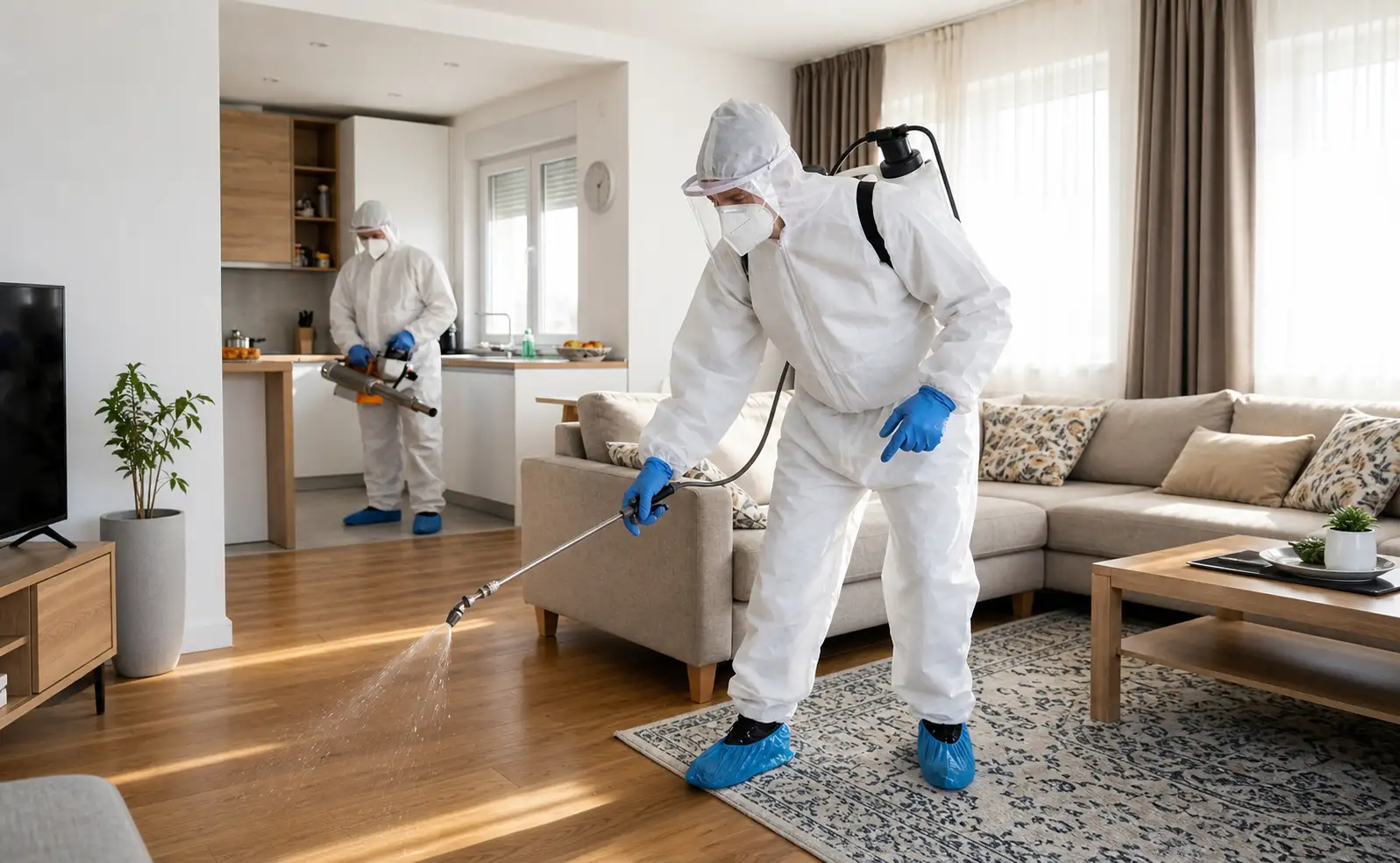
What Is Disinfection Service?
Disinfection service helps reduce germs in homes, offices and business spaces with a planned profess...

Səbət boşdur
We add value to your greenery with professional gardening services.



Sep 01, 2026

0
5 dəq. oxuma
A restaurant kitchen ventilation system works continuously for many hours each day. Grease vapors, smoke, and soot produced during cooking adhere to the inner surfaces of extraction hoods, air ducts, and exhaust stacks, gradually forming a thick layer. Although this buildup is often hidden from view, it restricts airflow, allows heavy odors to linger in the kitchen, and—most importantly—increases the risk of fire.
For this reason, exhaust cleaning in restaurants, cafés, kebab shops, bakeries, and other food-service facilities is not merely a matter of appearance or hygiene. It is an essential preventive service that supports safe, efficient, and uninterrupted kitchen operations.
Commercial kitchen exhaust systems operate under a much heavier load than residential chimneys. Greasy vapors released by frying, grilling, baking, and other cooking processes enter the ventilation ducts. As the vapor cools, it turns into a sticky grease film on the inner walls of the system. Over time, this layer also traps soot, dust, and other particles.
As a result, the passage inside the duct becomes narrower, the fan works under greater strain, and smoke becomes harder to discharge outdoors. The system may appear to be running, while the kitchen’s air quality gradually deteriorates.
Accumulated grease is combustible. High temperatures or a spark from a grill, fryer, oven, or charcoal appliance can ignite grease deposits inside the ductwork. Fire may then travel rapidly through the exhaust system and spread toward the roof structure or other areas of the building.
This is why washing the hood filters alone is not enough. The ductwork beyond the filters, bends, vertical stack, extraction fan, and discharge point are all parts of one system and should be inspected and cleaned appropriately.
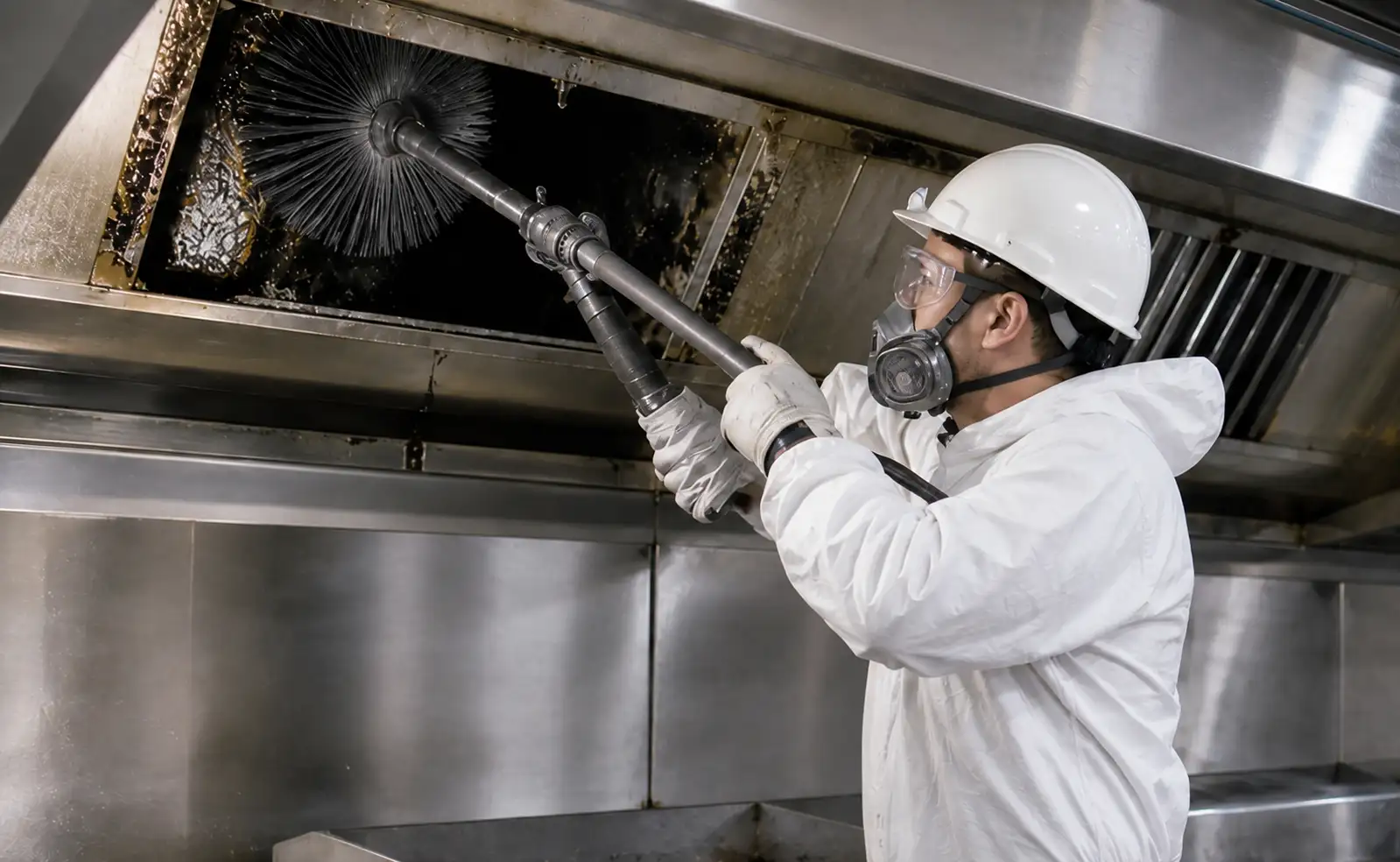
Before work begins, the layout of the system and the level of contamination are assessed. Kitchen equipment and the surrounding work area are protected, and accessible sections of the exhaust line are then cleaned step by step. Depending on the type and thickness of the deposits, the team may use mechanical brushing, scraping, and industrial vacuum equipment.
Professional service typically focuses on the following areas:
After cleaning, the system’s airflow is checked. If a technical problem is detected, recommendations are provided for further inspection or repair. The objective is not simply to remove visible grease, but to restore proper operation throughout the exhaust route.
There is no single interval suitable for every establishment. Cleaning frequency depends on operating hours, cooking methods, daily workload, and the equipment in use. Kitchens that rely heavily on charcoal grills, griddles, fryers, and high-volume cooking accumulate grease and soot more quickly and therefore require more frequent inspection.
The safest approach is to have the system checked regularly and establish a cleaning schedule based on the specific conditions of the facility. Preventive maintenance is safer and usually more economical than waiting for a blockage, fire hazard, or operational shutdown.
166 Bağban & Sanitariya provides professional cleaning of exhaust stacks and air ducts in restaurants, cafés, and other commercial facilities. Grease, soot, and other deposits are removed with suitable equipment, while airflow and the general condition of the system are checked.
If smoke remains in the kitchen, extraction performance has weakened, burnt odors are noticeable, or a long time has passed since the last service, it is advisable to have the system inspected before the problem becomes more serious. Learn more about our chimney and exhaust cleaning service and request a suitable service plan for your facility.



Jul 24, 2026

Jul 24, 2026
Jul 24, 2026
Jul 24, 2026
Feb
Disinfection service helps reduce germs in homes, offices and business spaces with a planned profess...
Jul
What determines safe re-entry after insect treatment, including ventilation, cleaning, children, pet...
Jul
A practical plan for finding standing water around a home or garden, reducing mosquito breeding site...

Peşəkar komandamız sizə bağınızı daha gözəl etməkdə kömək edəcək.
